// lastoctet · project octet

LastOctet

Enterprise DDI — DNS, DHCP, IPAM — built as a self-hosted lattice.

A DDI control plane you actually run yourself.

Project Octet is a self-hosted DDI platform — DNS, DHCP, and IPAM — built as a lattice of cooperating members. Every site runs the same software and syncs state through an append-only event log, so a network team can own its own infrastructure without standing up a control plane per office, and without trusting a vendor-managed cloud with the naming and addressing of its own network.

Under the hood: PowerDNS for authoritative zones, ISC Kea for DHCP, dnsdist for resolver front-ends, and a WireGuard mesh that links members across sites and CGNAT with no exposed public IPs. The coordinator stores canonical state in PostgreSQL; member agents apply pushed configs — subnets, zones, classes, reservations — on every affected node in seconds.

The management plane gives you multi-tenant views and zones, hierarchical IPAM containers with real CIDR topology, DHCP scopes and leases with failover-aware Kea runtime config, shared host records that resolve across views, bulk-hostname templating, and fine-grained RBAC / ABAC on every resource — down to per-zone and per-subnet actions.

Everything runs in Docker, on the hardware you already have. Project Octet is built for network teams who want to keep their DDI close to the metal — auditable, portable, and under their own control — without giving up the polish of a modern control plane.

Deploys on
Docker + Compose, on Linux x86_64 or arm64. A coordinator, one or more members per site. No Kubernetes required.
Speaks
PowerDNS API, Kea DHCPv4 control channel, dnsdist, WireGuard. Standard protocols, open data model, exportable at any time.
Scales to
From a single site with a handful of subnets, to multi-site lattices with thousands of zones, millions of leases, and regional resolvers.

Everything a modern DDI needs.

Multi-tenant DNS

Views, zones, and records with Infoblox-style namespace isolation. Authoritative PowerDNS plus dnsdist front-ends, shared host records across views, bulk import from Infoblox CSV or BIND, apex NS publishing, and per-zone override rules.

DHCP at scale

ISC Kea with API-first runtime config — no restarts on subnet or reservation changes. Per-scope classes and options, bulk-hostname templating, DDNS to matching forward zones, and failover pairs that sync state through the lattice event log.

IPAM with structure

Hierarchical network containers with real CIDR topology, address-level detail panels, and fingerprint reconciliation between discovered, reserved, and assigned hosts. Track every IP back to the record, scope, or lease that claimed it.

Mesh between sites

A WireGuard overlay knits members across sites and CGNAT together. CGNAT-safe addressing, no public IPs required, no third-party relay. Same-host Docker members join the mesh as first-class peers.

Event-sourced sync

Every state change — zone, record, scope, lease, reservation — lands in an append-only event log. Members replay the log to converge. Sites can diverge under a partition and rejoin cleanly, with an auditable history of exactly what changed and when.

Admin-grade access

RBAC and ABAC on every resource, down to per-zone and per-subnet actions. Named roles, scoped tokens for automation, full audit trail, and no shared root account. Sign in with local users today; SSO integrations on the roadmap.

One lattice, many shapes.

Start with a single host. Grow into a multi-site lattice when you're ready. Nothing about the architecture forces a bigger footprint than you need on day one.

Shape 01

Single-host lab

Coordinator, one DNS member, one DHCP member — all on one box via docker compose up. Ideal for home labs, testbeds, and evaluating the product.

  • Fits in 2 GB RAM
  • No mesh, no external network prerequisites
  • Bring your own DHCP L2 (macvlan supported)

Shape 02

Regional HA pair

Two physical hosts in the same region running a coordinator + standby database replica, paired DNS members, and a Kea failover scope pair — continuity through any single-host failure, same UI, same lattice.

  • Postgres streaming replication
  • Kea DHCPv4 failover pair with lease sync
  • Active-active authoritative DNS

Shape 03

Multi-site lattice

Members spread across branch offices, data centers, cloud VPCs — joined by the WireGuard mesh. Each site keeps its own DHCP and local recursor; zones and IPAM converge through the shared event log.

  • CGNAT-safe — no exposed public IPs required
  • Append-only event log, replay and rejoin
  • Per-site DNS views and DHCP

From a live lattice.

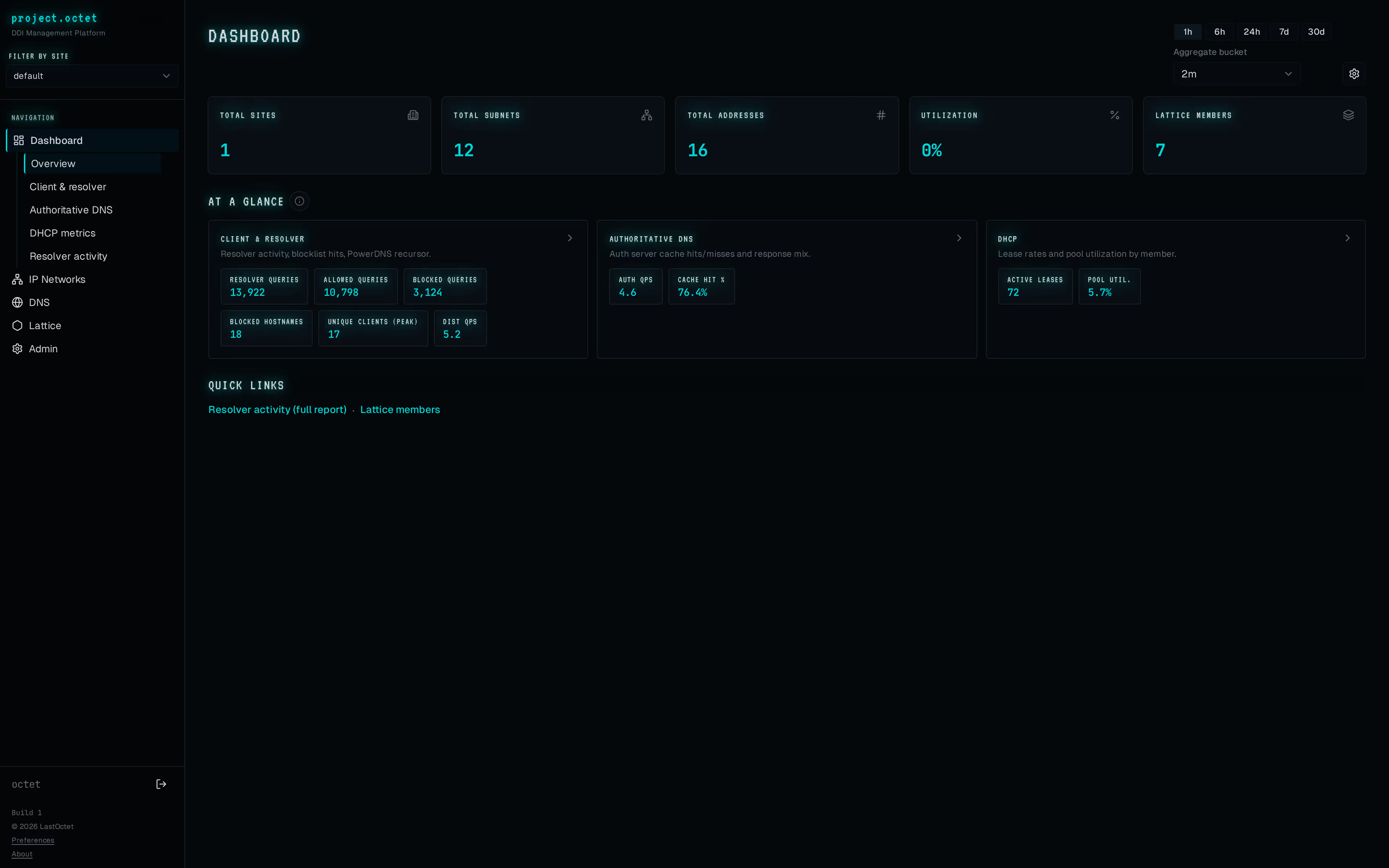
Project Octet dashboard overview
Dashboard — lattice health, lease rate, resolver activity.
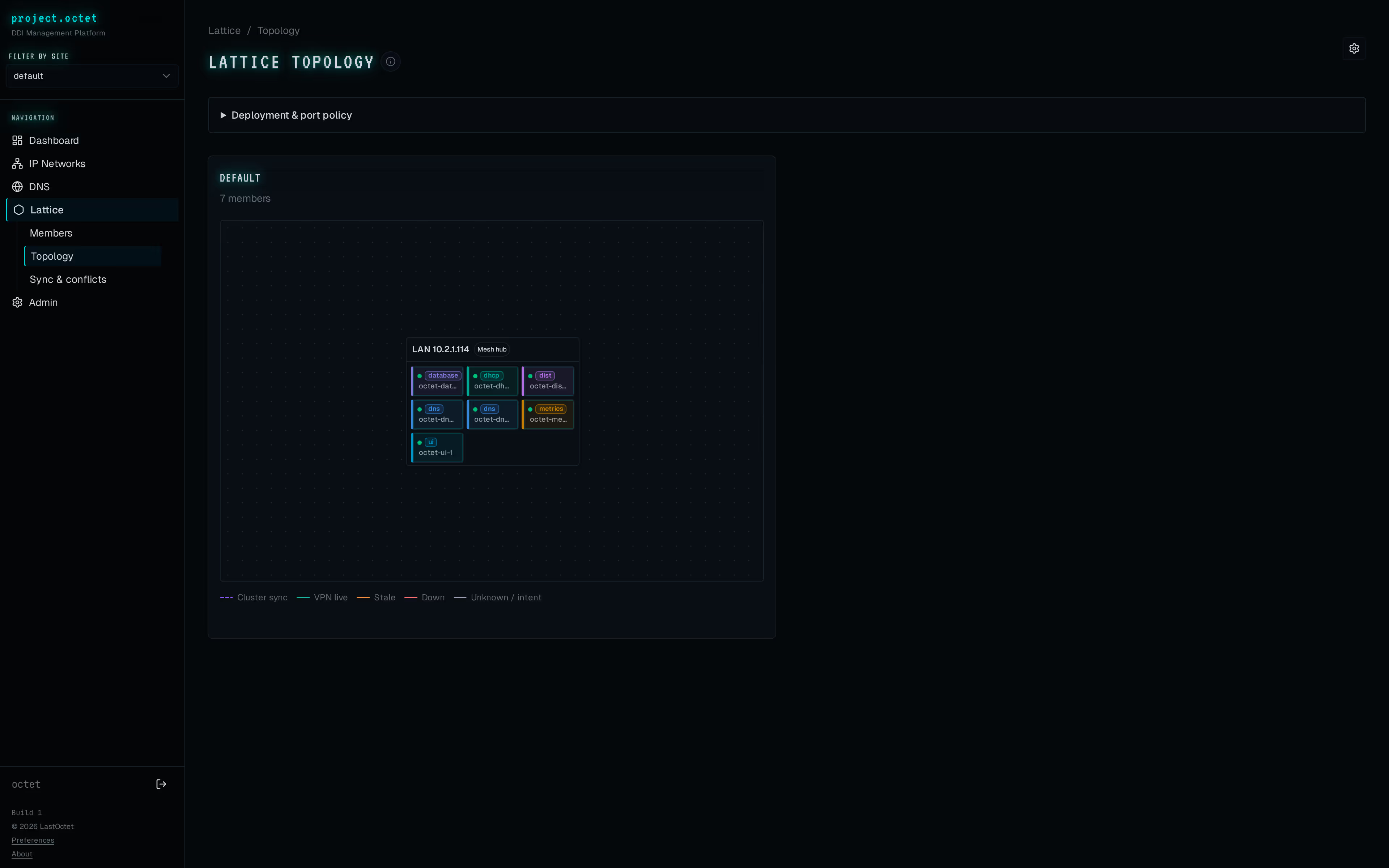
Lattice topology view showing hosts and members
Lattice topology — hosts, members, and the mesh between sites.
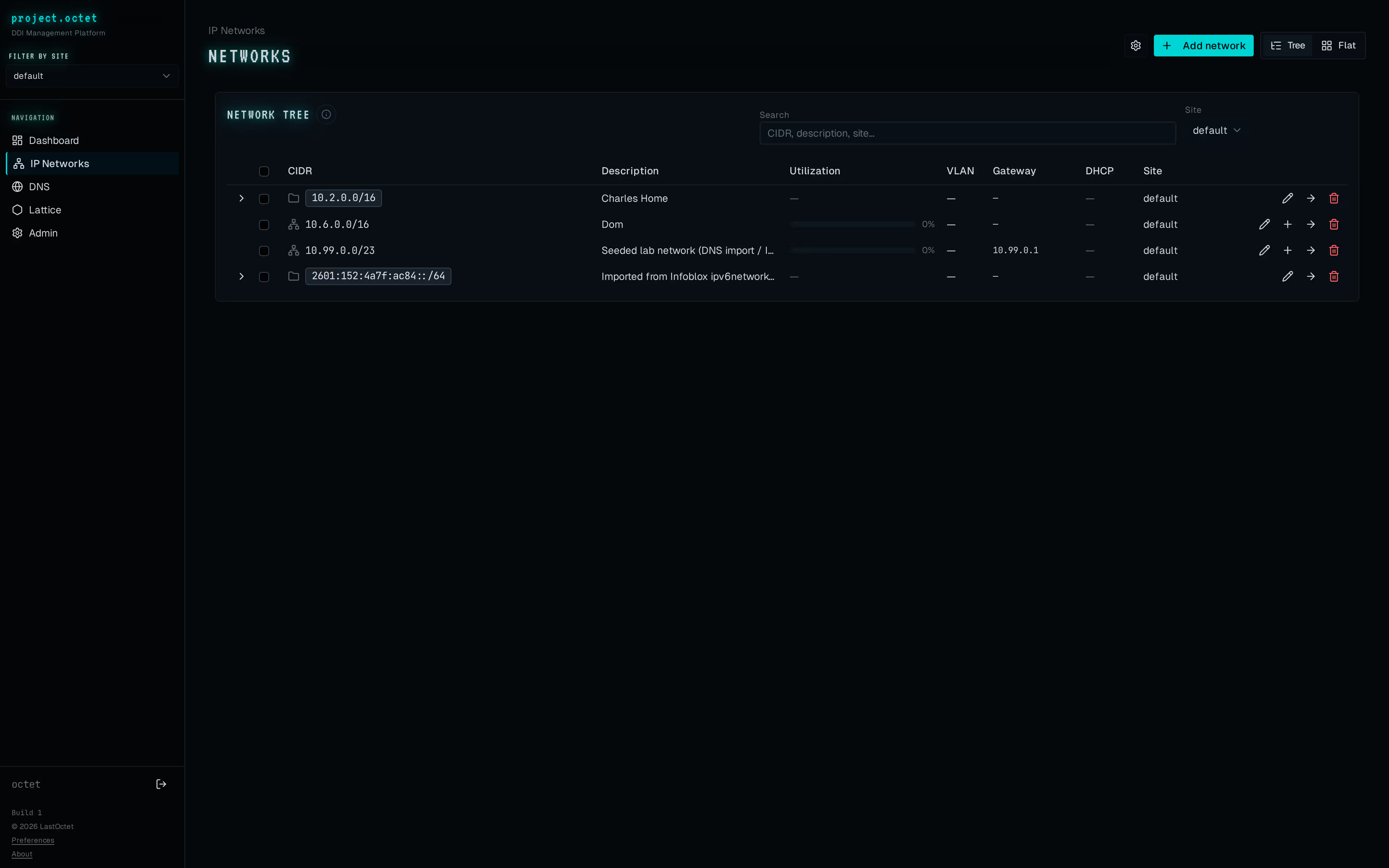
IPAM network list with hierarchical containers
IPAM — hierarchical network containers, CIDR-aware.

Built by a small team.

LastOctet is a small team working directly with early customers. If you talk to us, you're talking to the people building the product.

CD

Charles D'Aoust

CEO

AB

Ahmed Bukhari

CTO

DS

David Sacramo

CFO

CG

Camille Guédon

VP of Customer Relations

Bring it to your network.

We're working with early partners to roll Project Octet into production DDI stacks. If that's you, we'd like to hear about it.